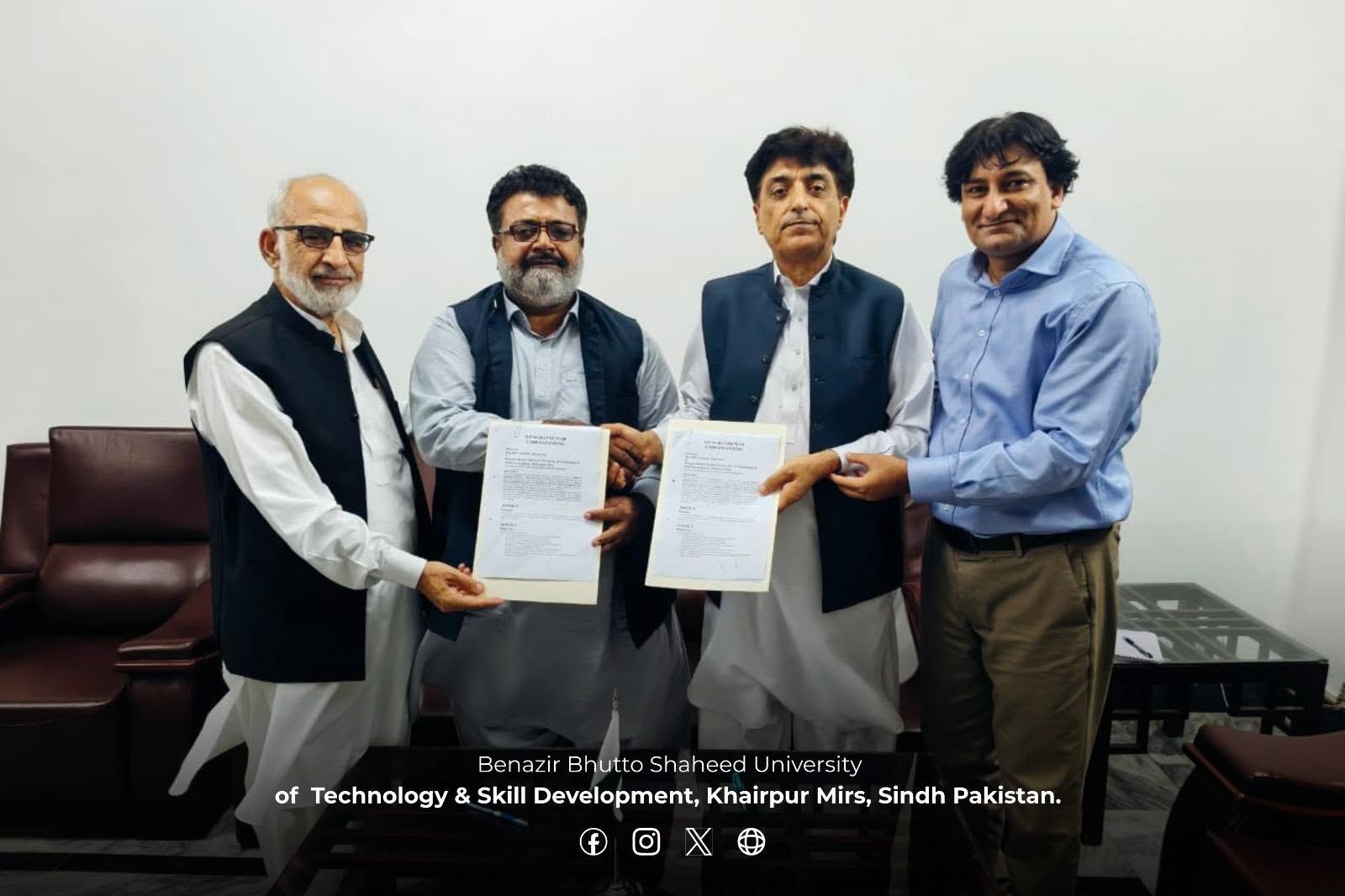
In a landmark step towards inter-provincial academic cooperation, Prof. (Meritorious) Dr. Rasool Bux Mahar, Vice Chancellor of Benazir Bhutto Shaheed University of Technology & Skill Development (BBS-UTECH), Khairpur Mirs, visited BRAINS Institute, Peshawar, on the cordial invitation of the Founder Rector, Mr. Zafar Ullah Khan, and Pro Rector, Engr. Prof. Dr. Atta Ullah Shah.
The visit centered on the signing of a Strategic Academic, Research and Innovation Partnership MoU, laying a comprehensive framework for joint research, faculty and student exchange, quality assurance, technology transfer, and institutional capacity building. Following the signing ceremony, both institutions exchanged commemorative shields and souvenirs as a symbol of mutual respect and shared vision. Adding a graceful cultural touch, Prof. Dr. Rasool Bux Mahar presented the timeless Sindhi Ajrak and the finest dates from Khairpur to Mr. Zafar Ullah Khan and Engr. Prof. Dr. Atta Ullah Shah, embodying the warmth of Sindh’s heritage and the spirit of national unity.
The day’s engagements culminated in an honorary dinner hosted at the prestigious Peshawar Club in honour of the Vice Chancellor. The gathering was graced by a distinguished cohort of higher education leaders and experts who enriched the dialogue with their insights. The esteemed attendees included:
· Dr. Almas Ayub, University of Southern Punjab
· Prof. Dr. Usman Ghani, Director, IMSciences, Peshawar
· Dr. Imranullah Marwat, Director, Quality Assurance Cell, Higher Education Department, Government of Khyber Pakhtunkhwa
· Dr. Nauman Ahmad, Regional Director, Higher Education Commission
· Mr. Shakir Ali, Chief Executive Officer, Educationists and Thinkers Forum
· Dr. Shaukat Shah, Director, Quality Enhancement Cell, BRAINS Institute
The evening provided an invaluable platform for candid discussions on emerging challenges and opportunities in higher education, quality assurance, and meaningful inter-university collaboration. Both institutions reiterated their commitment to a structured implementation roadmap, ensuring that this partnership yields tangible academic and research outcomes for students, faculty, and the broader knowledge economy of Pakistan.
This memorable visit truly bridged Sindh and Khyber Pakhtunkhwa, proving that when academia unites beyond boundaries, innovation and progress follow naturally.